
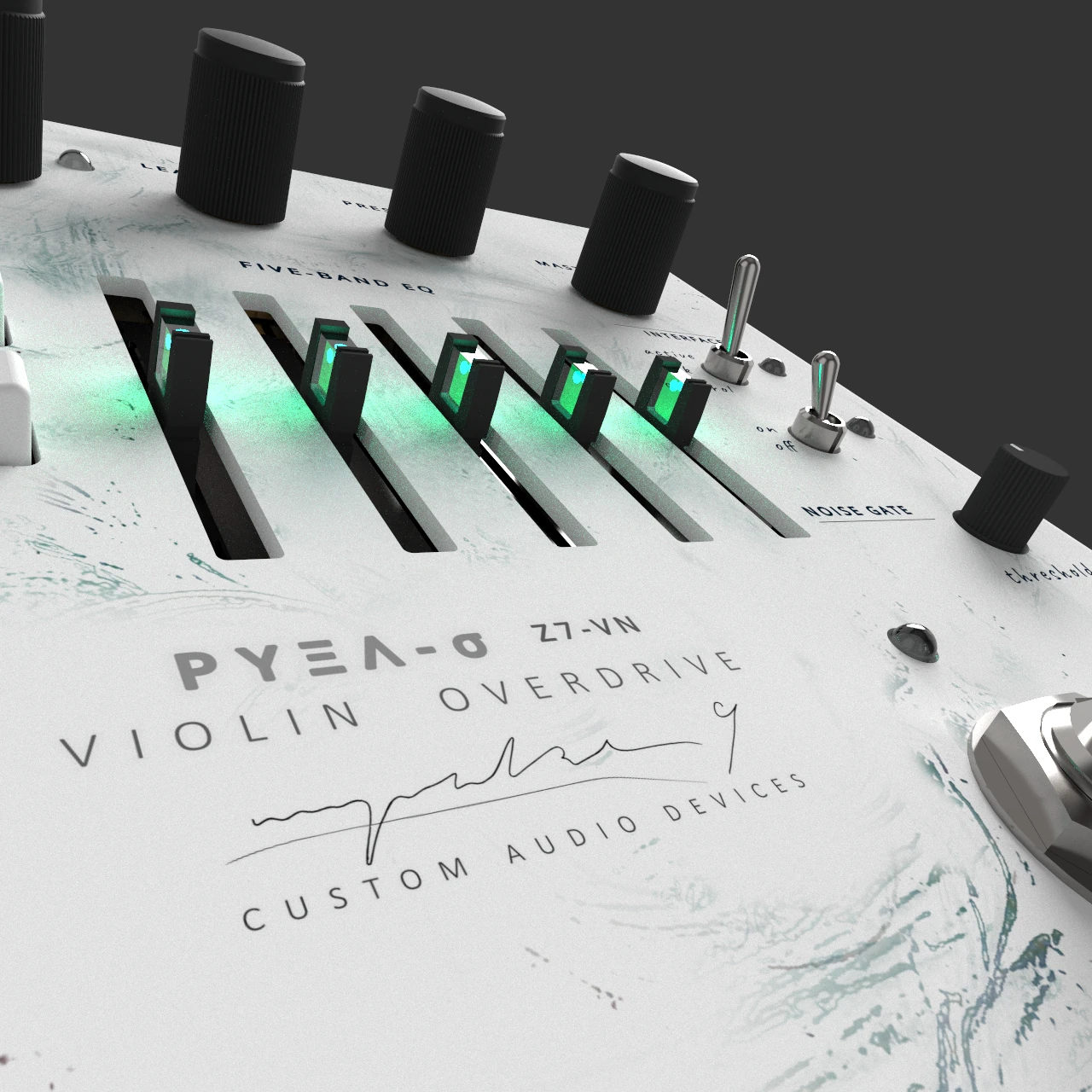
Z7‑VN (Advanced Violin Overdrive)
Advanced violin overdrive that adapts to your instrument’s resonance.

Overview
Every element of the Z7-VN is engineered to solve the specific challenges violinists face when overdriving their instruments.
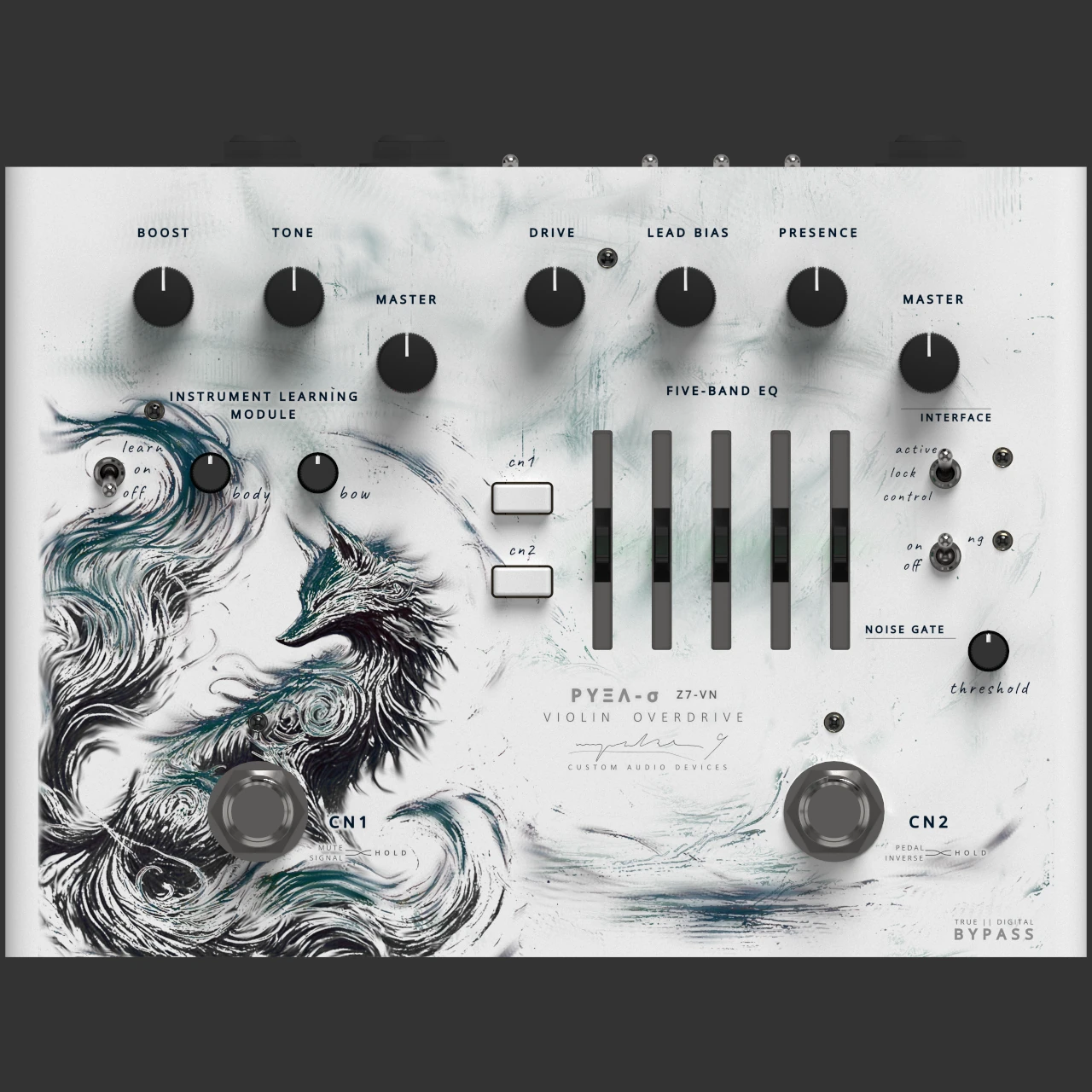
The Z7 is the flagship platform of the Z-Series — a fully adaptive overdrive and tone-shaping system for bowed string instruments with piezo pickups. Designed as the foundation from which the Z3 and Z5 units are derived, the Z7-VN offers full control, advanced signal architecture, and deep tone customization for professional violinists seeking precision and expressive range.
At its core, the Z7 houses two independent overdrive paradigms: the smooth, tape-based architecture of the Z3 and the dynamic, tape-tube hybrid of the Z5. Each operates through its own dedicated signal path and programmable control set, allowing players to switch between two distinct tonal philosophies.
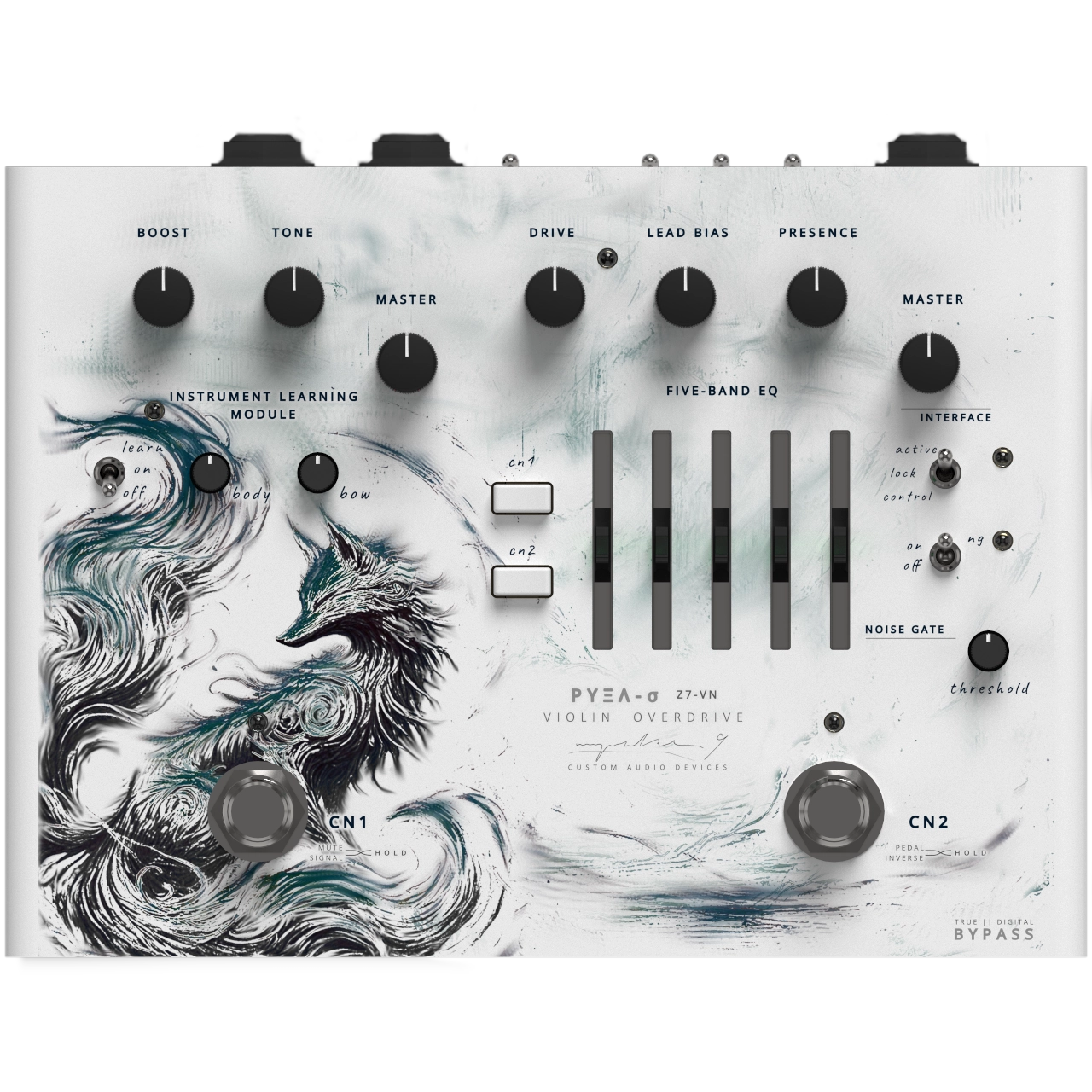
The Z3-style channel focuses on harmonic enhancement and refined clarity, while the Z5-style channel delivers full-range overdrive with selectable Vintage or Modern response modes. Both paths feature individual gain structures and fully programmable control states. Exclusive to the Z7 is a Presence control, providing a refined upper-harmonic lift that helps the instrument cut through the mix naturally without harshness or affecting its dynamics or tonal balance.
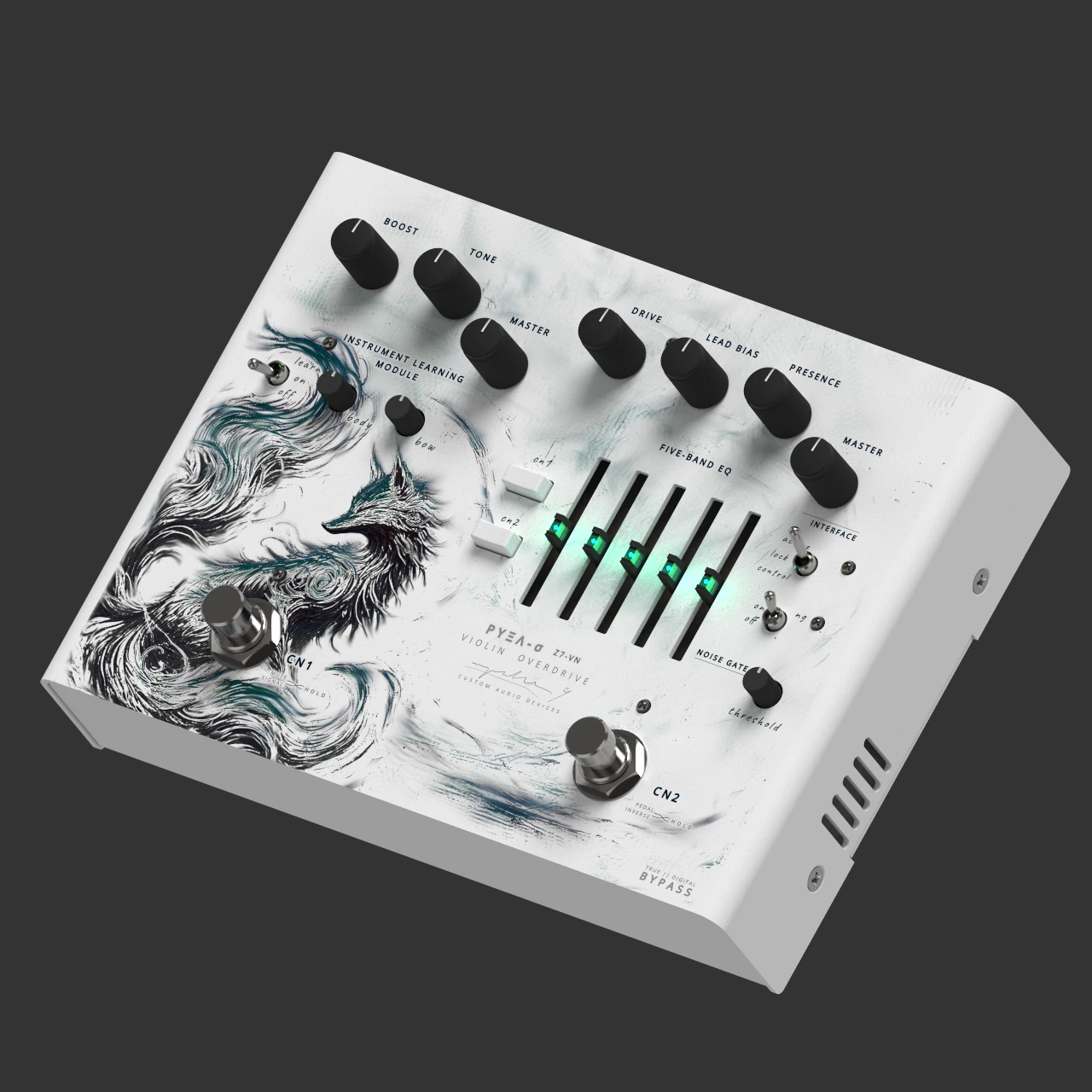
The Z7 features a fully programmable five-band EQ on each channel, providing extensive tone-shaping possibilities beyond what's typically available in instrument overdrives. Each band is tuned to musically relevant frequency ranges for violin, allowing precise control over body warmth, midrange focus, and high-end attack.
The Z7’s noisegate is designed specifically for high-gain onstage performance, built directly into the overdrive architecture for instant response. Unlike conventional pre-post gates, it reacts within the drive stages itself, maintaining full attack definition and dynamic nuance while keeping the signal tight and noise-free — ideal for modern, expressive playing styles.
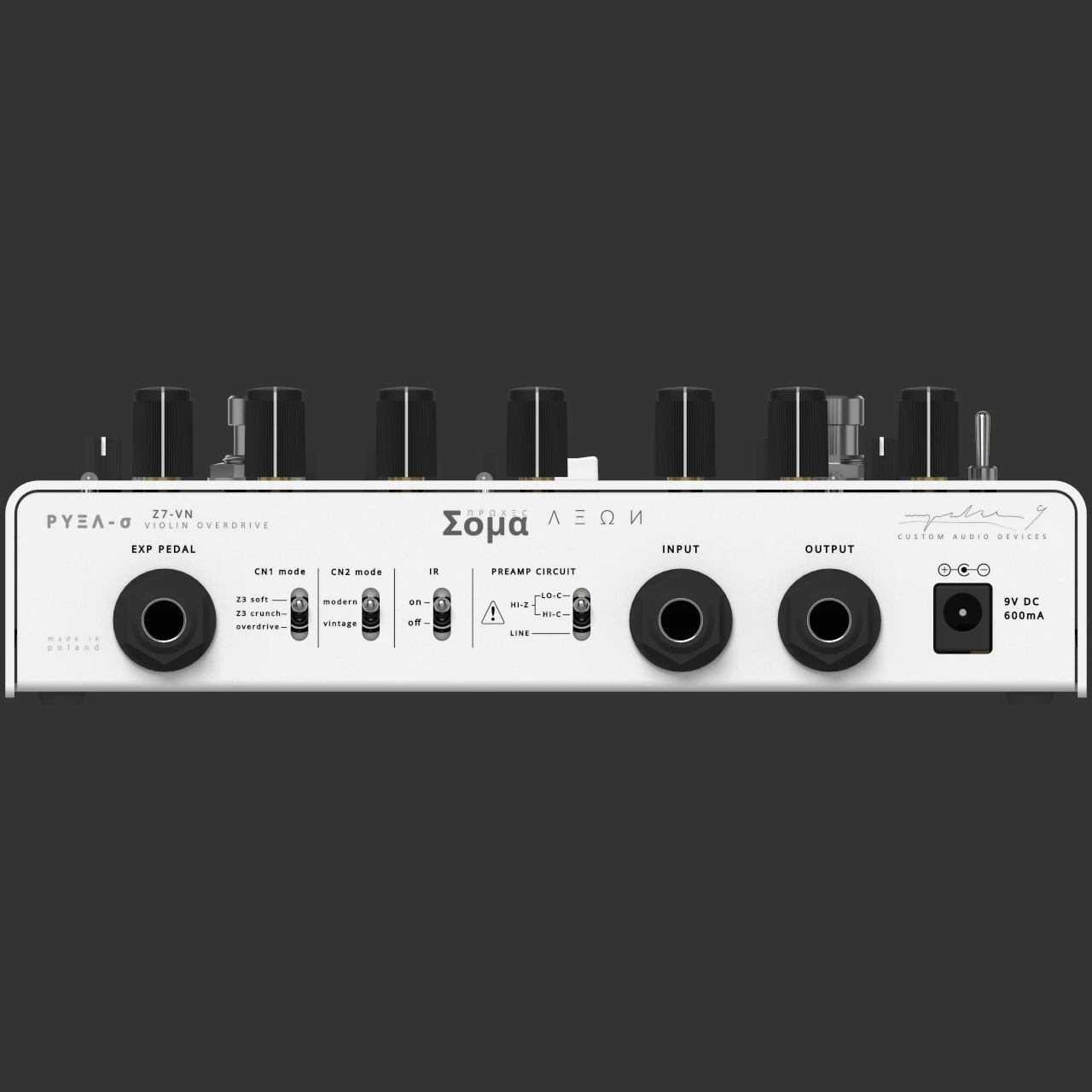
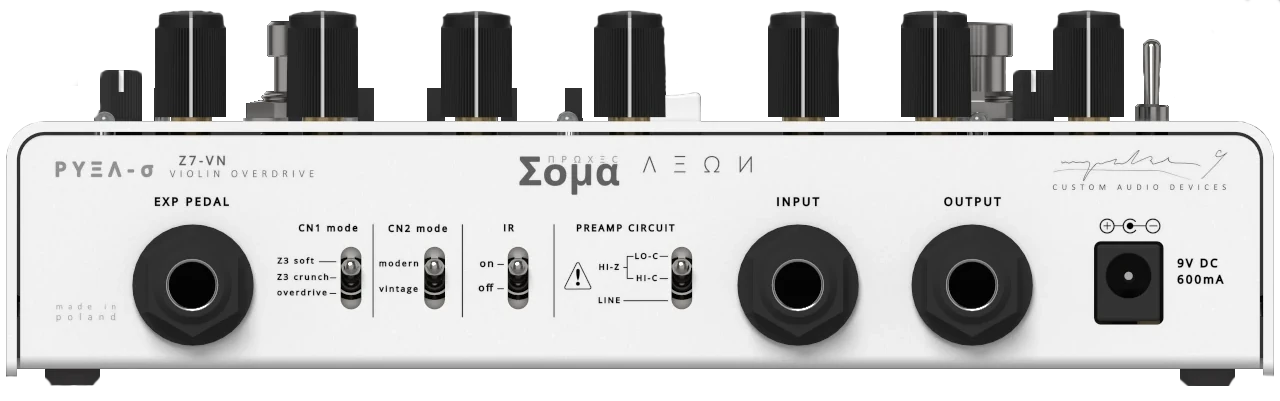
Expression control extends the Z7's dynamic range: an external pedal can continuously morph saturation, allowing seamless movement from subtle warmth to high-gain response without altering output volume.
Instrument Learning Module analyzes the resonant response of the player's instrument — including body resonance and bow friction characteristics — and generates a custom model matched to that behavior, offering body resonance and bow friction response adjustments for fully tailored drive control.
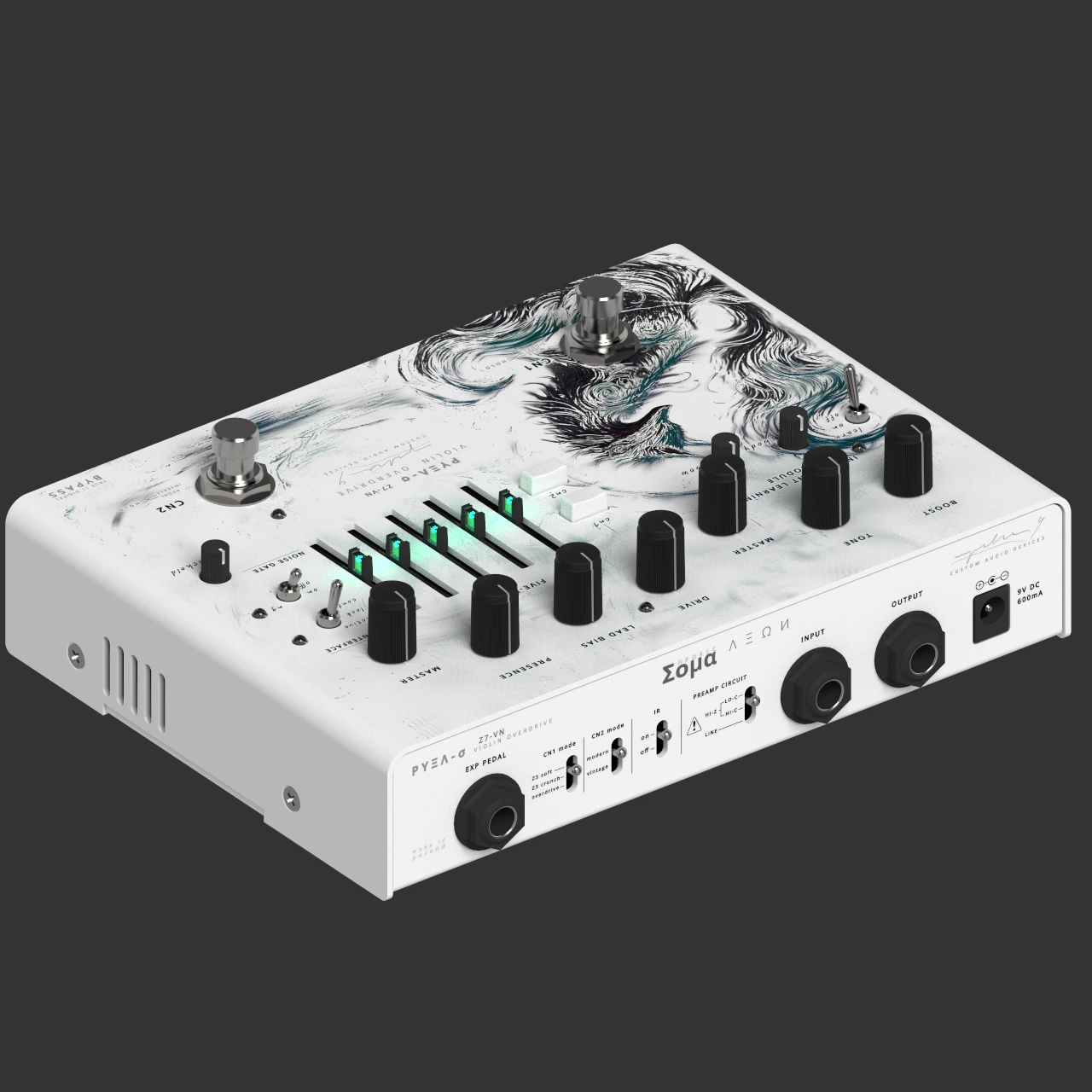
Built for direct integration into modern setups, the Z7-VN outputs a PA-ready, full-range signal — no guitar amps or cabinets required. Combined with selectable true or digital bypass modes, memory lockout, and stage-safe ergonomics, it's designed to deliver professional-grade reliability and musical expressiveness in any environment.
In essence, the Z7 represents the complete, unrestrained version of the Z-Series platform — combining the tonal heritage of analog design with the precision and adaptability of modern DSP. It's a tool for violinists who demand full control over their sound, from refined harmonic shaping to complex, expressive overdrive textures.
Explore the Z7-VN Controls
Frequently Asked Questions
1. General Product & Concept
What is the impulse9 Z7-VN Advanced Violin Overdrive?
The Z7-VN is the flagship impulse9 overdrive platform designed specifically for piezo-equipped violin instruments. It combines advanced adaptive processing, dual overdrive channels, Instrument Learning technology, and detailed tone shaping to provide expressive professional violin overdrive while preserving the natural articulation and dynamics of the instrument.
Who is the Z7-VN designed for?
The Z7-VN is designed for professional violinists using acoustic or electric violins equipped with piezo pickups who need advanced control over their tone for live performance, studio recording, and experimental sound design.
How is the Z7-VN different from the Z5-VN?
The Z7-VN expands on the Z5-VN concept by adding two independent overdrive
channels, Instrument Learning Module, advanced EQ control, expression-controlled
saturation, and additional performance-oriented features.
It is designed for musicians who require deeper control
over their violin sound.
Does the Z7-VN require a guitar amplifier?
No. The Z7-VN is a complete violin signal-processing system and can connect directly to a PA system, mixer, audio interface, or powered monitor. A traditional guitar amplifier is not required.
2. Instrument Learning & Adaptation
What is the Instrument Learning Module?
Many acoustic players struggle with high-gain effects because standard distortion settings ruin the natural resonance and clarity of their instrument, often resulting in a sound that feels harsh or muddy.
The impulse9 Z7-VN Violin Overdrive solves the problem of high-gain distortion ruining your acoustic tone using its innovative Instrument Learning Module (ILM).
This system moves beyond conventional overdrive pedals that apply the same response to every instrument, by analyzing the unique resonant behavior of the connected violin including body resonance, bow friction response, transient attack, and pickup interaction, then generating a custom violin overdrive profile matched precisely to that instrument.This adaptive process allows the Z7-VN to preserve natural articulation, bow dynamics, and tonal balance even under high saturation levels. The system continuously optimizes how the overdrive reacts to specific physical inputs:
- Bow pressure
- Attack intensity
- Resonance peaks
- Piezo response
- Transient behavior
- Harmonic excitation
The result is a violin overdrive response that feels integrated with the instrument itself rather than imposed on top of it.
The Instrument Learning Module takes full advantage of the soma-AXON adaptive processing architecture developed exclusively for the impulse9 Z-Series platform.
Why does the Z7-VN need to learn my instrument?
Every violin and piezo pickup combination behaves differently. The Instrument Learning Module allows the Z7-VN to adapt its processing to the acoustic and electrical characteristics of your instrument.
Can I use the Z7-VN without running the Instrument Learning Module?
Yes. As a default Z7-VN operates without the learning procedure. However, using the Instrument Learning Module provides a more personalized response for each instrument.
3. Drive, Tone & Performance
What are the two overdrive channels in the Z7-VN?
The Z7-VN features two independent overdrive channels, allowing players to access different gain structures and tonal characters during performance. Each channel can be configured for different musical situations.
Can I use separate five-band EQ settings for Channel 1 and Channel 2?
Yes. By using the Interface Control, the Z7-VN five-band EQ can be programmed separately for each channel.
Can the Z7-VN produce subtle saturation as well as heavy distortion?
Yes. The Z7-VN responds dynamically to bow pressure and playing intensity, allowing everything from subtle harmonic enhancement to expressive overdrive and aggressive distorted violin textures.
Can I control the Z7-VN with an expression pedal?
Yes. Expression control allows musicians to adjust saturation dynamically during performance, creating smooth transitions between cleaner and more saturated violin tones.
4. Compatibility & Recording
Can the Z7-VN work with different violin pickups?
Yes. The Z7-VN was designed for piezo-equipped bowed instruments and includes input matching options to accommodate different pickup characteristics while maintaining natural frequency response.
Is the Z7-VN suitable for studio recording?
Yes. The Z7-VN provides repeatable professional violin tones suitable for recording applications where detailed control over saturation, dynamics, and frequency response is required.
Does the Z7-VN add noticeable latency?
No. The Z7-VN uses a high-speed processing architecture designed for real-time violin performance with a natural playing response.
soma-AXON runs at 176 kHz / 24-bit with sub-1 ms latency. Optimized for bowed instruments, it complements the instrument’s natural tone, adds controlled nonlinear warmth, and preserves transient detail and playability.