
A hybrid of analog and DSP architecture
Dedicated to violin
Violin Overdrive for Piezo Pickups
Every aspect of the Z-VN Series — from analog front end to digital processing and control design — is engineered specifically for violin instruments with piezo pickups in mind. This eliminates the guesswork that comes from using guitar-focused tools on violins.
ΛLΞ⍴-X
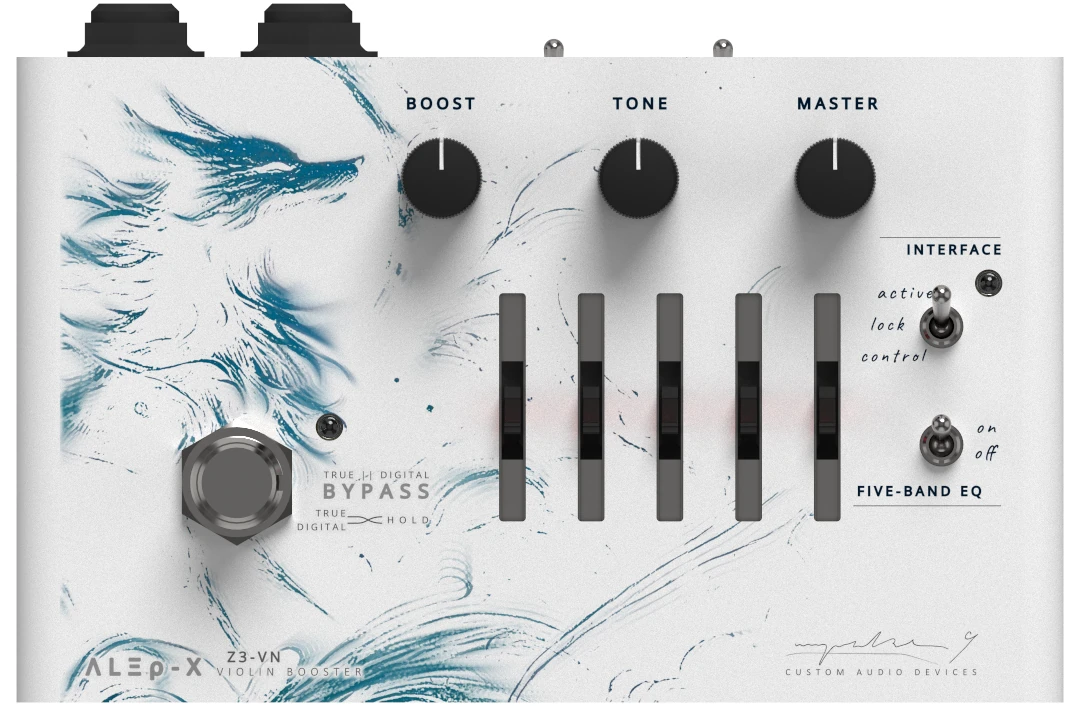
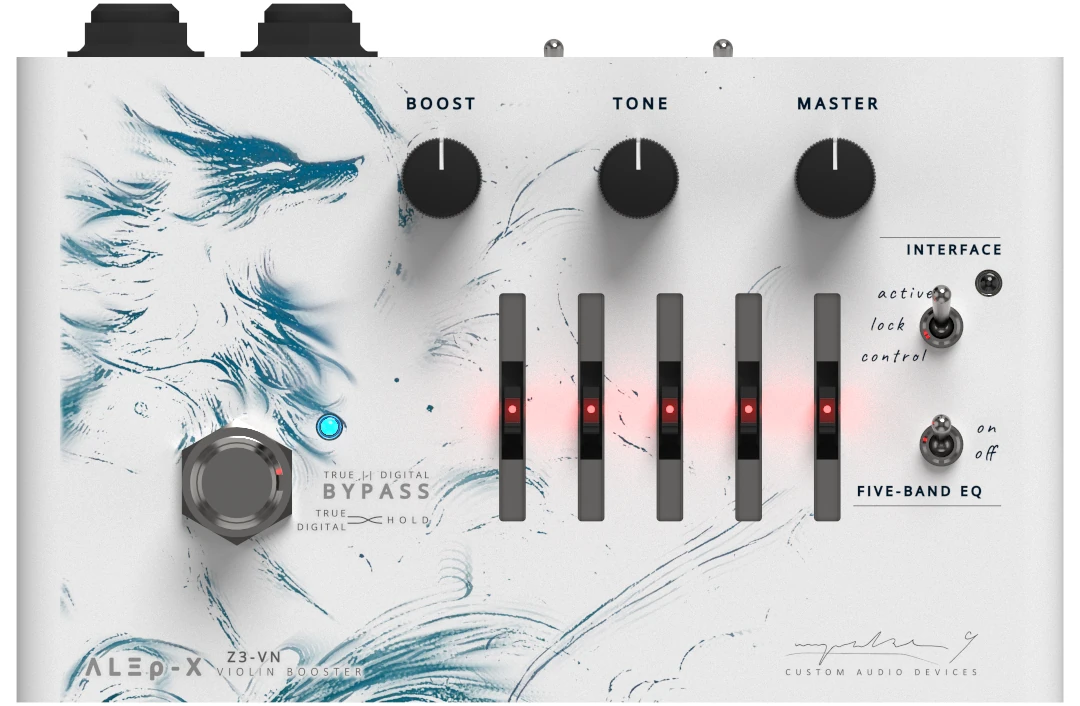
Z3-VN — Violin Booster
A tape booster and tone shaper designed to saturate violin pickups with tape-style warmth and dynamic response.
Check details →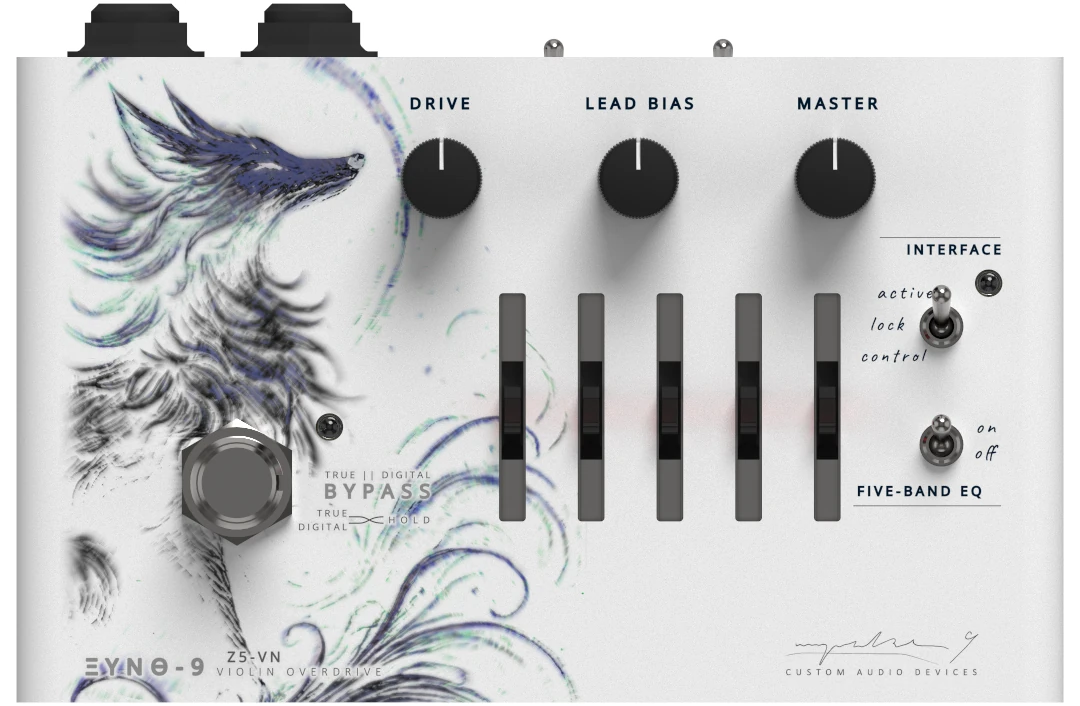
ΞΥΝΘ-9
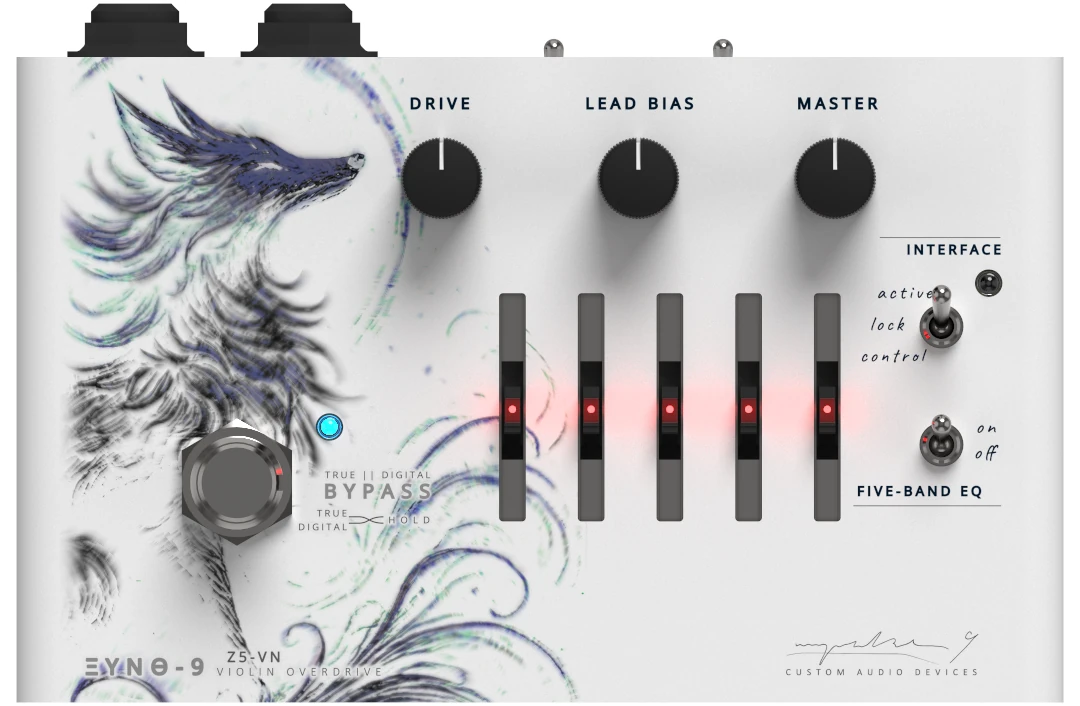
Z5-VN — Violin Overdrive
A tape-tube hybrid overdrive engine for piezo-based violin — combining expressive harmonic drive with precision dynamics. Plug-and-play design, mix-ready, with no need for guitar amps.
Check details →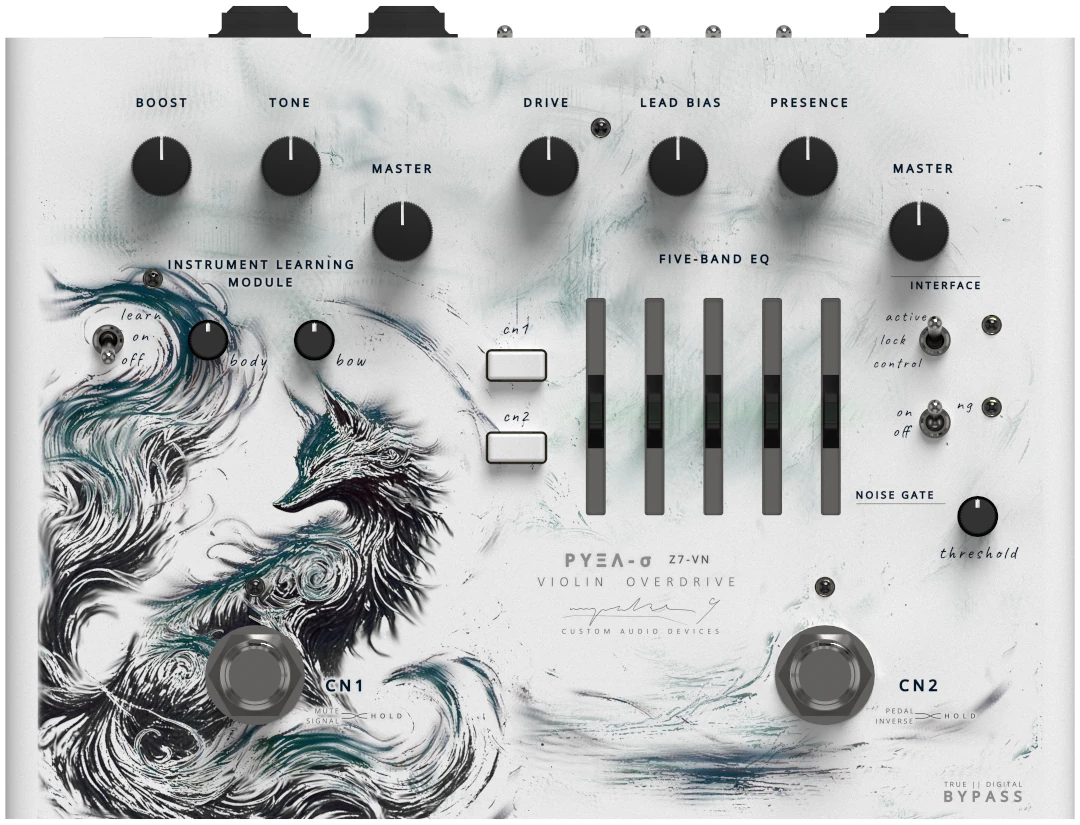
ΡΥΞΛ-σ
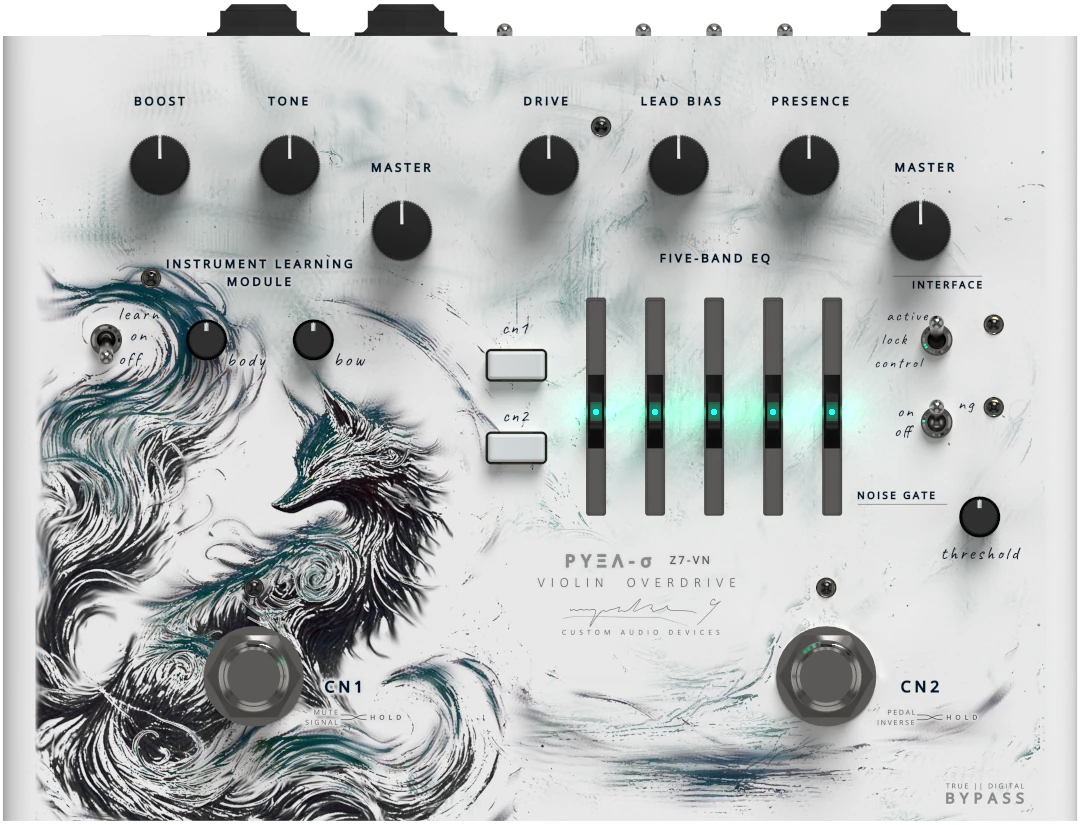
Z7-VN — Advanced Violin Overdrive
Advanced violin overdrive that adapts to your instrument's resonance. Two independent channels (Z3-style and Z5-style), Instrument Learning Module, programmable per-channel 5-band EQ, expression-controlled saturation, and a stage ready Noisegate. mix-ready plug-and-play design — no guitar amp required.
Check details →
soma-AXON runs at 176 kHz / 24-bit with sub-1 ms latency, and is optimized for bowed instruments. Capable of learning an instrument's characteristics, its goal is not to replace an acoustic tone but to complement it — adding controlled nonlinear warmth while preserving transient detail and playability.
Preamps designed for Piezo
Dedicated analog preamps designed for bowed strings, with Hi-C and Lo-C options to match high- or low-capacitance piezo pickups, ensure consistent tone and natural instrument response.
Stage-focused ergonomics
Hardware controls, snap-memory toggles and software lockable knobs are designed for quick, reliable adjustments during performances.
Reliable by design
Low-latency architecture and precision-built hardware ensure consistent behavior, accurate feel, and dependable operation on stage or in studio.
Analog Tools
Frequently Asked Questions
1. Signal Integrity & Wearable Buffering (ZR-C101 Impedance Rod)
Why does my passive acoustic violin pickup (like Kremona, Barcus Berry, or Fishman) sound thin, scratchy, and harsh when plugged into an amplifier or mixer?
This is a classic impedance mismatch and capacitance loading issue. Passive piezoelectric pickups have an extremely high output impedance (typically several megohms).
- When you connect a passive violin pickup directly to a standard guitar amplifier, mixer, or DI box, the input impedance of those devices is often too low (typically 10kΩ to 1MΩ), which severely chokes the low-end frequencies, resulting in a thin, tinny, and "scratchy" sound.
- Furthermore, standard instrument cables act as capacitors. The longer the cable, the more high-frequency detail is rolled off, destroying your violin's natural acoustic articulation and transient response.
What is the best way to get a warm, natural acoustic tone from a passive violin pickup on stage?
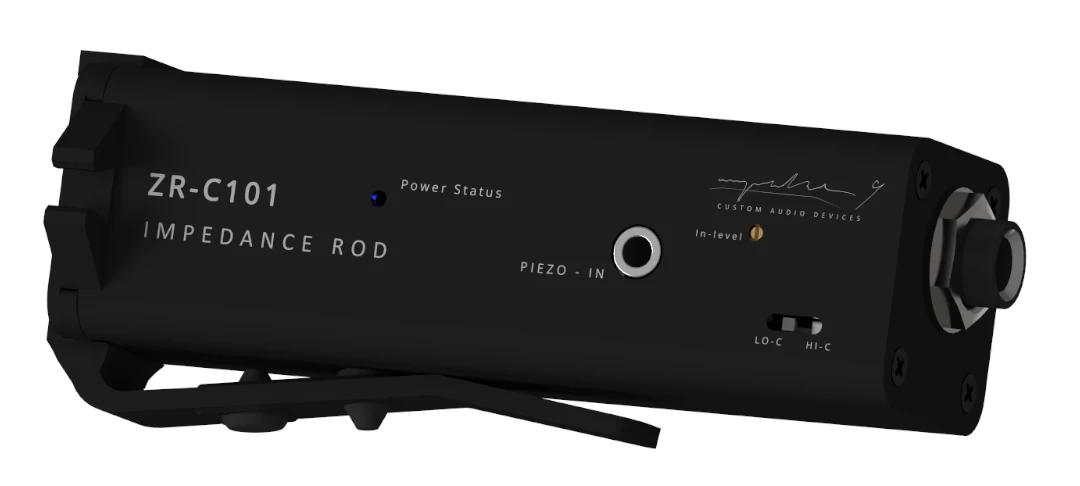
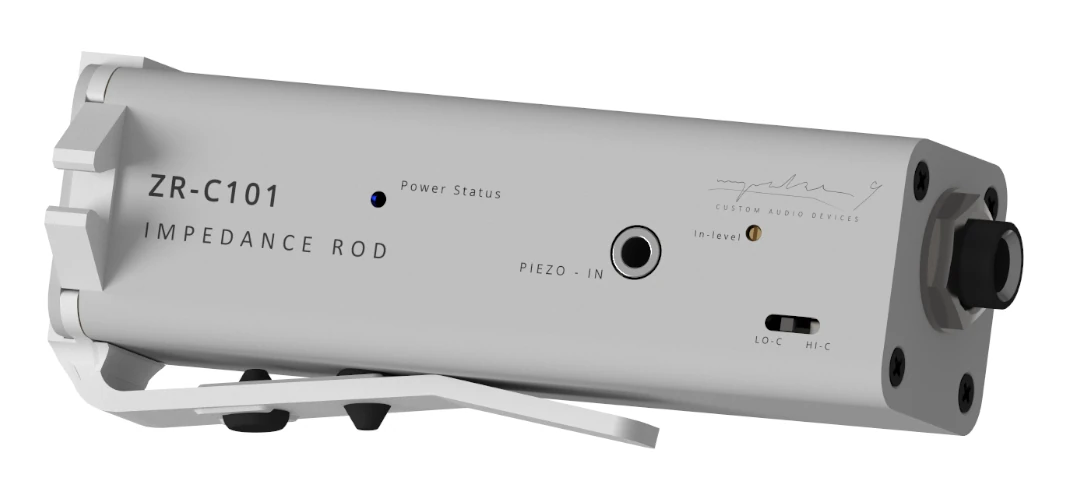
The ultimate solution is to buffer the high-impedance signal immediately at the source before it enters a long cable run. The impulse9 ZR-C101 Impedance Rod is a lightweight, wearable analog buffer preamp designed specifically for this purpose.
- Close to source: It clips to your belt, connecting to your pickup via a short cable.
- Ultra-High Input Impedance: Boasting a massive 1MΩ input impedance, the ZR-C101 ensures that the full frequency spectrum and dynamics of your violin are captured without tone-sucking loading effects.
- Low-Impedance Active Output: It converts your piezo signal into a robust, low-impedance active signal capable of driving long cable runs directly to mixers, acoustic amps, or pedals with zero high-end roll-off or noise interference.
2. Acoustic Preamp & Dynamic Processing (Z3-VN Violin Booster)
How can I stop the harsh "piezo quack" and dynamic spikes when playing acoustic violin through a live PA system?
"Piezo quack" is caused by the inability of standard preamps to handle the rapid, high-voltage transient spikes generated by a bowed or plucked string, especially in percussive or energetic playing styles. Standard guitar preamps or generic compressors squash these transients unnaturally, making the violin sound compressed, artificial, and boxy.
The impulse9 Z3-VN Violin Booster solves this through specialized high-resolution processing and proprietary transient management:
- Violin-Tuned Dynamic 'Chopper': The Z3-VN features a dedicated 'Chopper' section with Soft and Crunch modes. Unlike generic compressors, it is custom-calibrated for bowed instrument transients, smoothing out harsh spikes (quack) while preserving the natural punch and rhythmic drive of techniques like "fiddle chops" or aggressive rock bowing.
- Studio-Grade AD/DA Resolution: Operating at 176.4 kHz / 24-bit digital processing with an ultra-low latency of under 2ms, the Z3-VN preserves the micro-details of your acoustic instrument's wood and air resonance.
What EQ settings are best for amplifying an acoustic violin to sound natural on stage?
Standard graphic EQ pedals are tuned for guitars, meaning their frequency bands miss the critical resonance zones of a violin. To make a violin sound natural, you need EQ points targeting the violin's specific harmonics.
The impulse9 Z3-VN features a high-precision 5-band EQ meticulously tuned to violin frequencies:
- Low-End Control: Safely filters out low-frequency handling noise and stage rumble without losing the warmth of your G-string.
- Mid-Range Control: The mid 3 nothces target the Violin Body frequencies. This is where you control the tonal character of your intrument
- High-End Control: Upper-mid and high-end frequencies shape the "woodiness" and bow hair texture.
- HI-C and LO-C Matching Modes: A unique hardware switch that matches the preamp’s capacitance to your specific pickup type ensuring optimized buffering while eliminating harsh high-end ice-pick frequencies before they even reach the EQ stage.
3. Overdrive & Custom Profiling (Z5-VN & Z7-VN Violin Overdrives)
Why do standard guitar overdrive and distortion pedals sound so harsh and feedback-prone on acoustic and electric violins?
Guitar overdrive pedals are designed for a plucked string's fast attack and exponential decay. A violin bow, however, creates a continuous, sustained high-energy wave.
- Standard guitar pedals over-compress this continuous signal, resulting in a harsh, fizzy "bee-in-a-can" sound that instantly triggers squealing acoustic feedback.
- Additionally, plugging a distorted violin directly into a clean PA system sounds thin and piercing because a PA speaker is full-range, whereas distorted tones require the warm frequency roll-off of a guitar speaker cabinet.
Is there a distortion or overdrive pedal designed specifically for the dynamics of a violin bow?
Yes. The impulse9 Z5-VN Violin Overdrive is a breakthrough analog/digital hybrid pedal engineered exclusively for bowed string dynamics:
- Bow-Pressure Sensitive Drive: The Z5-VN's tape-tube hybrid overdrive engine dynamically reacts to your physical bow speed and pressure. Light bowing produces a warm, subtle harmonic saturation, while digging in with heavy bow pressure unleashes a rich, singing overdrive that behaves exactly like an organic tube amplifier.
- Onboard Impulse Responses (IR Cabinet Emulation): The Z5 and Z7 are engineered to be completely 'PA-Ready'. To achieve this, we researched and built an entire frequency response system, optimizing tube-overdriven violin tones in the same way guitar cabinets optimize tube overdrive. Through simulation modeling, we created high-fidelity cabinet Impulse Response (IRs). These integrated IR emulates a professional mic’d violin cabinet. When connected to a PA mixer or audio interface, you get a full, woody, and massive sound to work with.
I want high-gain sound, but I don't want it to sound cheap or muddy. How do I get a tone that suits my violin?
Many acoustic players struggle with high-gain effects because standard distortion settings ruin the natural resonance and clarity of their instrument, often resulting in a sound that feels harsh or muddy.
The impulse9 Z7 Violin Overdrive solves the problem of high-gain distortion ruining your acoustic tone using its innovative Instrument Learning Module (ILM).
This system moves beyond conventional overdrive pedals that apply the same response to every instrument, by analyzing the unique resonant behavior of the connected violin including body resonance, bow friction response, transient attack, and pickup interaction, then generating a custom violin overdrive profile matched precisely to that instrument.This adaptive process allows the Z7 to preserve natural articulation, bow dynamics, and tonal balance even under high saturation levels. The system continuously optimizes how the overdrive reacts to specific physical inputs:
- Bow pressure
- Attack intensity
- Resonance peaks
- Piezo response
- Transient behavior
- Harmonic excitation
The result is a violin overdrive response that feels integrated with the instrument itself rather than imposed on top of it.
The Instrument Learning Module is powered by the soma-AXON adaptive processing architecture developed exclusively for the impulse9 Z-Series platform.
4. Low-Capacitance Cabling (LC-Series & C-Series)
Why does cable capacitance matter so much for passive pickups?
Standard instrument cables carry internal capacitance (measured in pF/m). When a high-impedance passive piezo pickup is connected to a high-capacitance cable, the system forms a low-pass filter. This electrical filter rolls off vital high frequencies, stripping the violin of its sparkling air harmonics and dulling your bow attack.
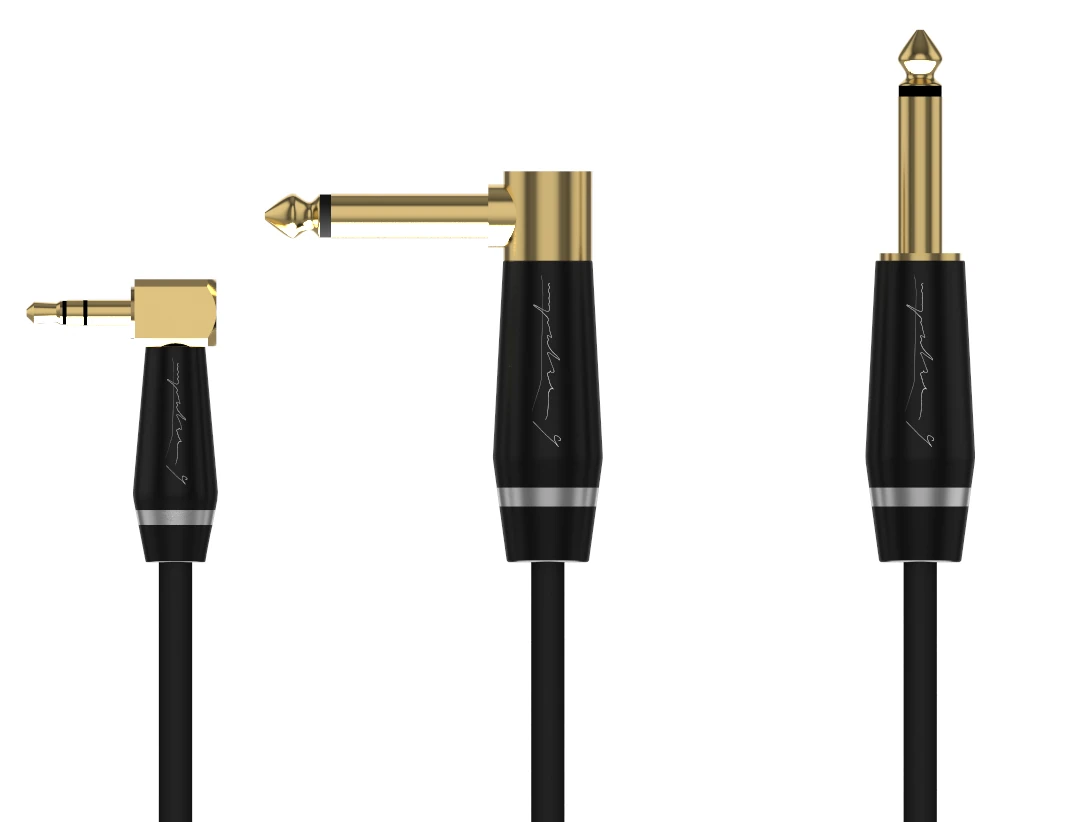
impulse9 LC-Series cables are engineered with ultra-low capacitance, ensuring that the full range of frequencies and micro-details reaches your preamp completely unaltered.
What is the difference between LC-Series and C-Series cables, and where do I use them?
Both series are premium grade cables but are optimized for different purposes:
- LC-Series (Low-Capacitance): Designed for the first, most critical link between a passive piezo pickup and preamp. Its sub-90 pF/m rating prevents high-frequency loss while maintaining a flexible, thin profile (5mm diameter), that features good shielding for reliable stage use. This design ensures optimal performance and comfort for the violin player.
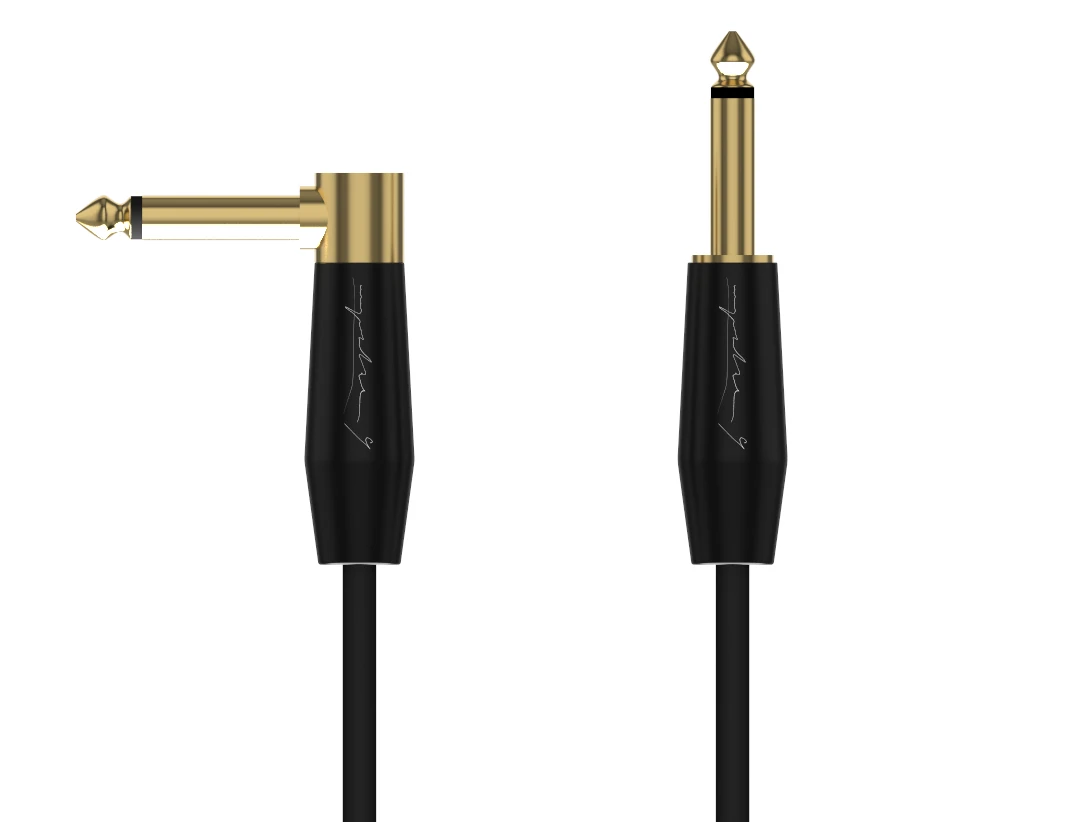
- C-Series: Optimized for active/buffered systems (such as active electric violins or connecting pedalboard outputs to the PA mixer). This cable prioritizes shielding to block RFI/EMI stage noise as well as mechanical noise on active signals. It's thicker and heavier.
impulse9 is an independent audio engineering brand based in Poland. Founded by Kamil Stolorz, impulse9 specializes in designing high-performance DSP and analog tools for piezo-equipped violins and other string instruments. Every product is designed, prototyped and assembled up in our workshop in Poland.
Read about our philosophy →